
Dangerous Games: Rum — Runners vs. Coast Guard
Originally written by Howard F. Burdick and published in the Summer 2002 edition of Historical Footnotes, the quarterly newsletter of Historic Stonington.
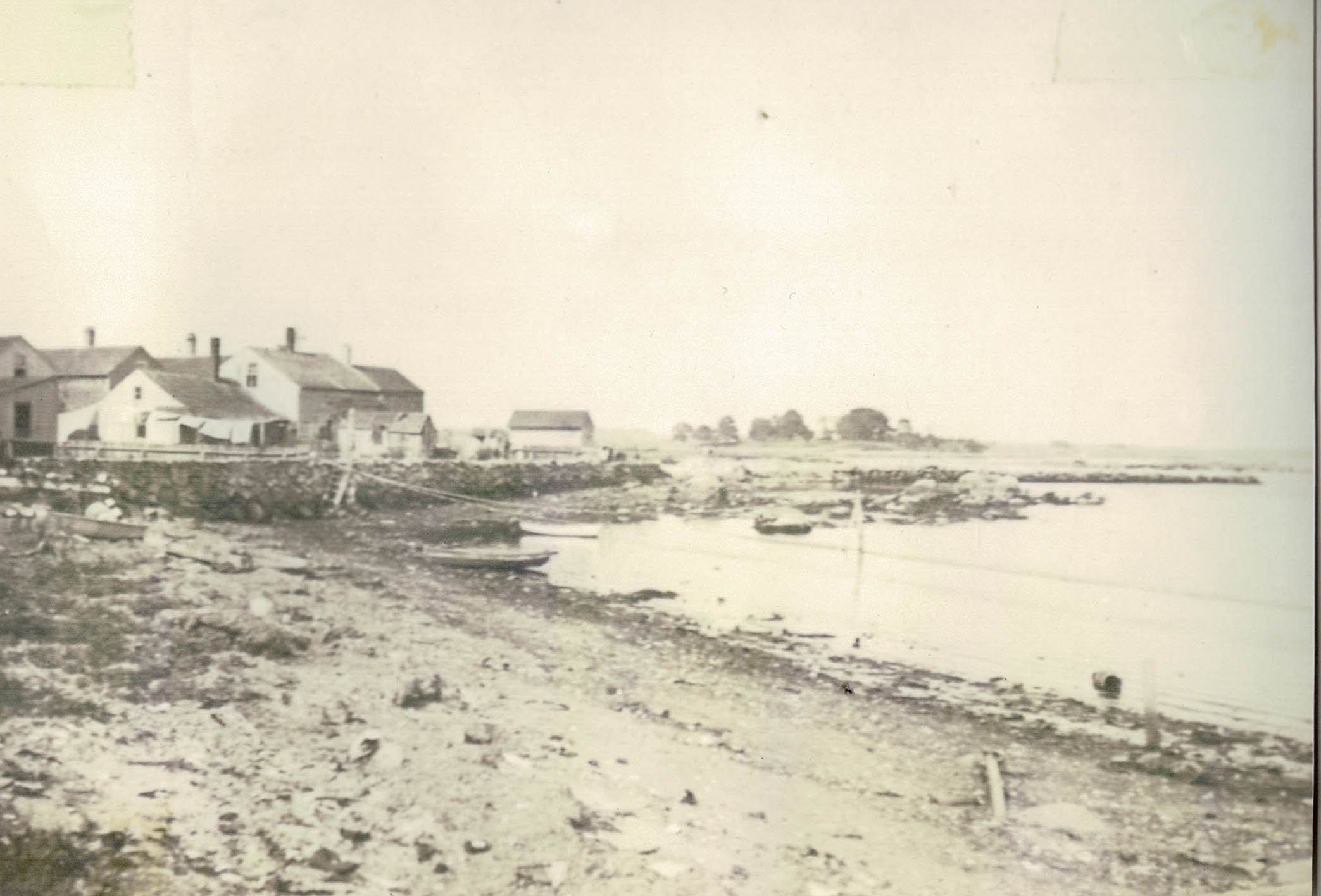
Seventy years ago, during Prohibition, the waters around Stonington were an important link in the effort to keep New England supplied (illegally) with liquor, despite the assiduous efforts of the Coast Guard. Local newspapers paid scant attention to this little naval war, but one of the rare accounts of a typical encounter was published in the 1936 yearbook of the Southern New England Fishermen’s Association. The author was the vice-president of the association.
The night was very black, drizzly, chilly and altogether unpleasant, with a fresh southeast breeze whipping up a nasty chop through Block Island Sound. It was the kind of a night indeed, when the average human desires a cozy berth ashore, where he may listen to the wind howl around the corners of his abode, hear the rain pelting upon the window panes, and at the same time peruse in entire comfort the sort of literature he likes best.
There are those, however, strange as it may seem, to whom the foregoing cozy description means little. Those who revel in exposing themselves to the fury of the elements, who love the roll and heave of a deck under their feet, who thrill to the mystery and lurking dangers of the night.
These are the type of men who made up the crew of the Helen, on that eventful night, and to some of these men the greatest thrill of all is not the wrath of the elements, the realization that about an inch and a half of frail wood is between them and Davy Jones’ Locker, but the knowledge that they are inside the three-mile limit, loaded to capacity with illegal cargo and therefore liable at any minute to be “spotted”, to cut loose and run for it and subsequently to be the target for one pounders and machine gun fire, a battle on the high seas that no one usually witnesses, a battle royal of wits between smuggler and Coast Guard, of the pitting of nautical knowledge and maritime lore, one against the other; a grim and grueling test of boats and motors, each tuned to the highest pitch and usually laboring under the greatest stress.
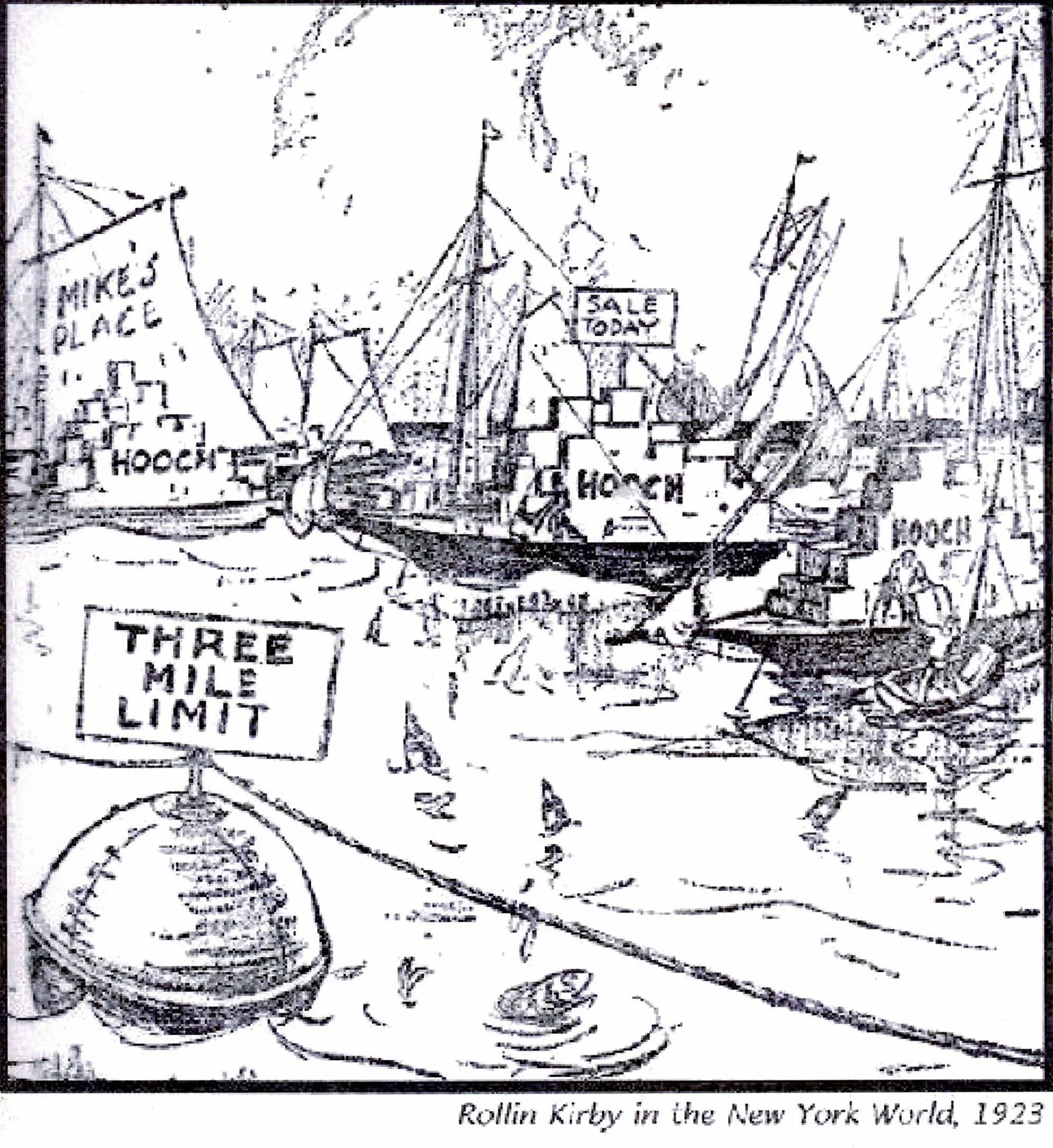
IT would be unfair to the smuggler to call it also a battle with powder and shot, for as a general thing the professional rum-runner does not carry arms and therefore the fusillades of shot are all going one way. The greatest hazard, the biggest thrill, not the elements of weather but the element of chance. Yes, they are dyed in the wool gamblers. Let us step aboard the Helen as she gets under way from her trysting place, and with a thousand cases, or rather sacks, of “Golden Wedding” and “Johnnie Walker”, securely stored below, opens her motors to about two thirds speed and directs her sharp bow in a northerly direction.
I seem to see four men at their various posts of duty with keen anticipation, and not fear or nervousness, written in their faces. No lights are showing except a bug in the binnacle and two frosted dimmers in the engine room. All dead-lights and port holes are painted over with shoe blacking anyhow, so that no chance illumination may penetrate without.
The two eight-cylinder Speedway motors are sweetly crooning to one another and a couple of inches of bilge water regularly swashing to and fro beneath the floor of the engine room, are having a tendency to lull the faculties of the two men presiding there.
The skipper lolling over the binnacle in the pilot house for’ard, smoking a cigarette, while the mate holds the spokes of the wheel loosely in his grasp, carelessly watching the lubber’s mark in the compass bowl as it is passed and repassed by that luminous cardinal point, north. From time to time the man with the cigarette indifferently but regularly opens the pilot house door and steps out on the deck for a minute, after which he again enters the house and lolls as before over the binnacle.
We don’t know how many times this maneuver has been repeated but as she steps inside this time we note a change of expression in his face, a tenseness of body that was not there before. He rings the engine room for full speed and continues to stare out into the night with the door ajar. The mate asks no questions but concentrates a little more closely on that lubber’s mark. IN the engine room a quart bottle is crammed down into a heap of oily waste and Morpheus leaps from the picture for the remainder of the night.
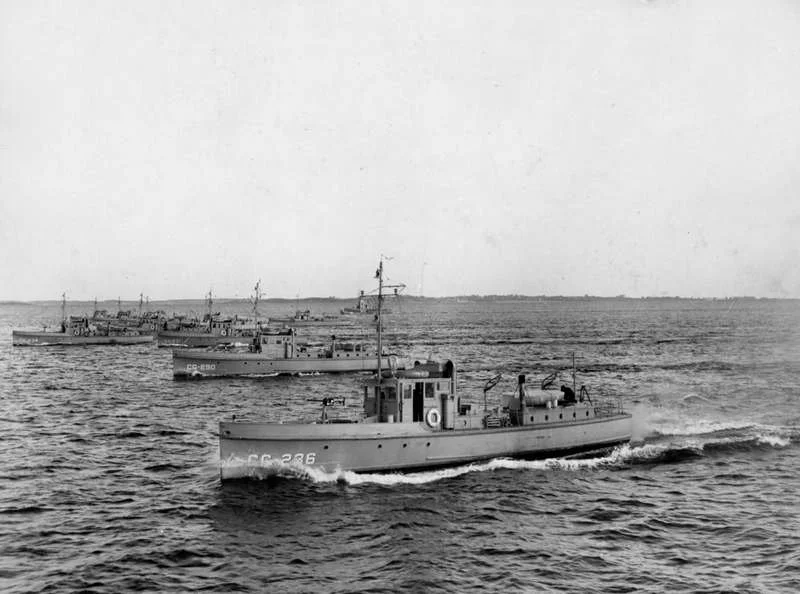
75-foot 290 Coast Guard Boats
Having accompanied the Helen to this point, which happens to be about 14 miles off shore and midway between Block Island and Montauk Point, let us desert, for the moment, and look in on Boatswain Cornell, aboard the 75-footer 290, the very craft and the self-same gentleman who so dramatically “stopped” the erstwhile smuggler “Black Duck” last winter. The 290 has a reputation to maintain the directly the Helen is sighted, a “dud” is cast off in that direction. The Helen hasn’t the least notion of stopping, however, seems to have an important appointment, so the Bo’s’n emphasizes his request to stop by dropping a one-pounder down about fifty yards ahead of the smuggler. This grim suggestion is also disregarded and the chase is on.
Cornell has not the slightest desire to cause casualty aboard the Helen if it can be avoided, so he hooks his own Speedways up to their maximum revolutions and finds to his gratification that he can hold the Helen and maybe gain a hair. So he holds on, within gunshot, but holding his fire until such a time as it may be absolutely necessary to prevent an escape. The Helen continues her course, hauling a fraction to the westward as the lights of the north shore become clearer.
Everything is set aboard the 290 and it seems but a question of time ‘til the smuggler is overhauled or surrenders. Then one of those “inconceivable exigencies” of Coast Guard warfare enters the picture. A large Sound steamer bound west and booming along too intersects the coast of the Helen and her pursuer.
The smuggler scents opportunity, alters his course diagonally with that of the steamer and runs in alongside to shoreward of the 290. The wily skipper of the Helen runs in this manner some distance, with the steamer unwittingly protecting her from fire and from view of the 290.
The trick that Boatswain Cornell, veteran campaigner that he is, employed to oust the Helen from that snug position of safety should not be disclosed, as he may desire to use it again some night. However, the trick was turned and soon the two craft found themselves in the same position as formerly.
Well, all this time the two craft are drawing nearer and nearer to Fishers Island and Cornell is beginning to worry a bit. He ranges now and then a one pounder but doesn’t use much machine gun fire for fear of igniting the Helen, as machine gun bullets are hot when they hit.
He recalled setting fire the Black Duck in this manner, as the “tracer bullets” ripped into the cargo of that ill-fated craft and fired the burlap sacking around the liquor. As the smuggler gets closer in, however, the 290 cuts loose a shot now and then that really takes effect and by the time the Helen sights Wicapesset Island, a little to the eastward of Fishers Island, she is beginning to get logy and desperate. Her skipper either had more than a speaking acquaintance with the treacherous reefs between Wicapesset and Watch Hill, or else he just simply took “an awful chance.”
Cornell was at this point looking for the smuggler to strike at any moment – but did he? Not by a jug-full. Right on, plumb between “Sugar Reef” and “Old Katumb Reef”, as though there were miles of deep water on both sides and fifty fathoms underneath. Instead, there were clusters of jagged rocks on both sides and perhaps a hundred yards of navigable water in the middle, about three fathoms depth and just plastered with lobster pot buoys of all descriptions.
The tide was roaring through this “gutter” at the time or the Helen might have gotten herself into such a tangle that she would have had to give up. The lobster Buoys were fortunately “running under”, so the rum-runner slipped through, only tickling few of them. Cornell made no pretense of being on intimate terms with these reefs, but close on the heels of his enemy and in full cry, he figured that he could go anywhere the Helen could, both boats being of about the same length and draught, so he plugged right through, gaining steadily.
It is probable that the Helen would, being thus crowded at this point, have made a try to escape to the westward, up by Latimer light or even to have swerved to the eastward down past Watch Hill, but right here, the tenacious 290 got a break that was a break. Two more 75-footers appeared on the scene, one coming down sound from the westward and the other coming in from offshore near Watch Hill Point.
The reinforcements soon saw the situation and changed their courses so as to intercept the Helen should she continue. The poor Helen was done for, however, and it is extremely likely that even if reinforcements had not arrived, she would have been forced to do exactly what she did, in order to avoid sinking, for she was making water fast by this time. She drove on for Napatree Point and sank by the bow, with her stern elevated in about 14 feet of water. Cornell approached cautiously, playing his searchlight the while and took the crew of the Helen off and onto the 290, without much trouble. The engines of the Helen, being amidships, were now partly underwater and the whole boat was in a state of havoc. A few sacks which had been stacked on the deck abaft the pilot house, were also beginning to wash overboard as the hull rolled and the crew were willing enough to abandon her, not knowing exactly the nature of the shore at that point. In view of what developed, it was well that they did not try to make a landing.
“She drove on for Napatree Point and sank by the bow, with her stern elevated in about 14 feet of water. ”
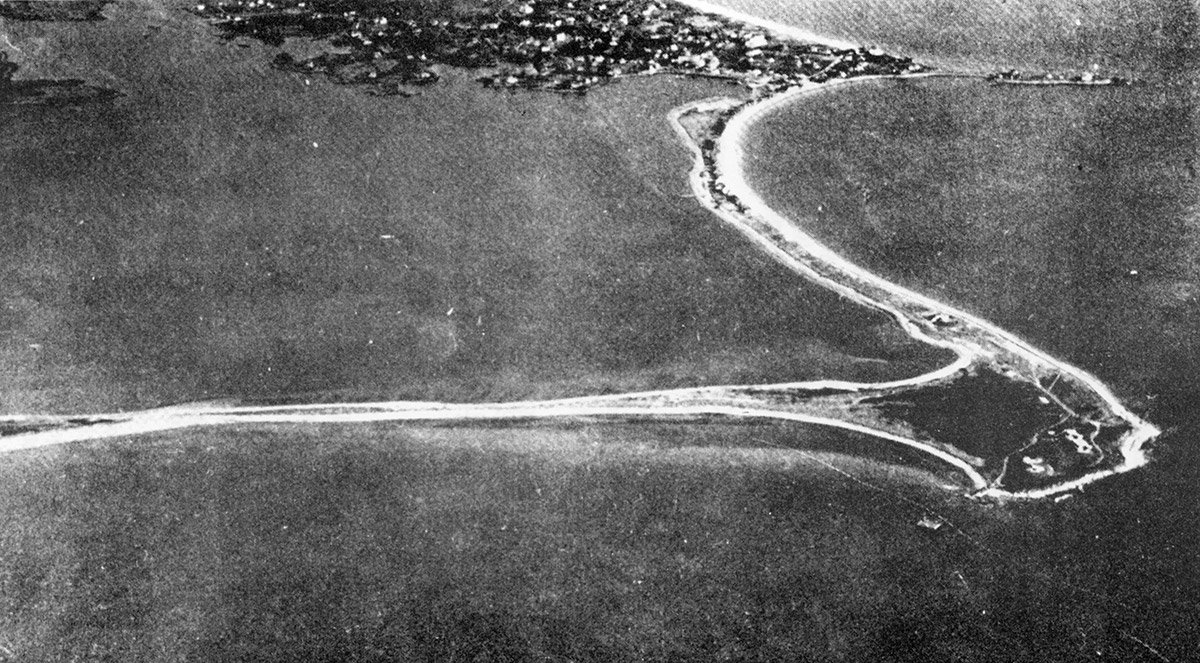
An aerial view of Napatree Point, 1936
At approximately 1:50AM on Friday, October 25, Surfman Sousa, who happened to be on lookout duty at the Watch Hill Coast Guard station, was attracted by much searchlight play in the general direction of Montauk Point, LI.
He watched the unusual display for some time, noting that it came ever nearer and it wasn’t long before he noticed other things, which weren’t exactly a mystery to a service man. He notified his superior officer, Boatswain George Streeter, and it didn’t take that astute veteran long to dope the whole thing out, even to the probably landing place of the Helen. Therefore, if the worthies aboard the smuggler had attempted to make the shore at the “Naps”, they would have been welcomed by an enthusiastic reception committee.
It leaked out next day that the Pueblos, another rum-runner, made a successful landing of 1000 sacks near Stonington the same night, so perhaps that knowledge removed, to some extent, the sting of defeat suffered by the Helen’s crew. However, the luck of the Pueblos was short lived, as she was also seized a few days later and taken to New London. And so it goes. It must be rather a strenuous life, taken as a steady diet.
Boatswain Streeter and his boys did picket duty on and around the Helen during the remainder of the night and the following day they removed 959 sacks of liquor and ferried them aboard a larger Coast Guard vessel.
These are long stretches of monotonous routine imposed on these shore stations, but when something of this sort comes along all hands and the cook make up for their rest and with a vengeance. The Helen’s bill-of-lading indicated that she cleared her rendezvous with 1000 sacks of contraband and as not quite all of them were accounted for it would seem as though some of them must have washed overboard, probably soon after the Helen filled and listed over. Well, as it happened, the Helen selected a portion of the beach where seine is sometimes drawn by fishermen as her final resting place.
It is barely possible that some fine evening, as the seiners, waist deep in surf and footing the leads carefully, drawing the bunt in with a rush, may feel more dead weight than the usual amount of weed would occasion. Perhaps it will be one of those chilly nights, with the breeze northwest, so that if the chap who usually makes the coffee finds that he is indisposed, the party may still regale themselves with refreshment and, fired with new life and zeal for more fish, be enabled to make longer and quicker sets. This, of course, is purely a supposition on the part of the writer and may never be substantiated.
Well, the good ship Helen served her owners faithfully and well; not being a new boat but a veteran, the chances are that she had passed through some hot times previously and had earned her right to retire. It is a pity though that such a staunch and valiant comrade should have to be quitted by the crew in such ignominious fashion and with so many ugly wounds to carry with her the snug harbor.